
A Place for Words
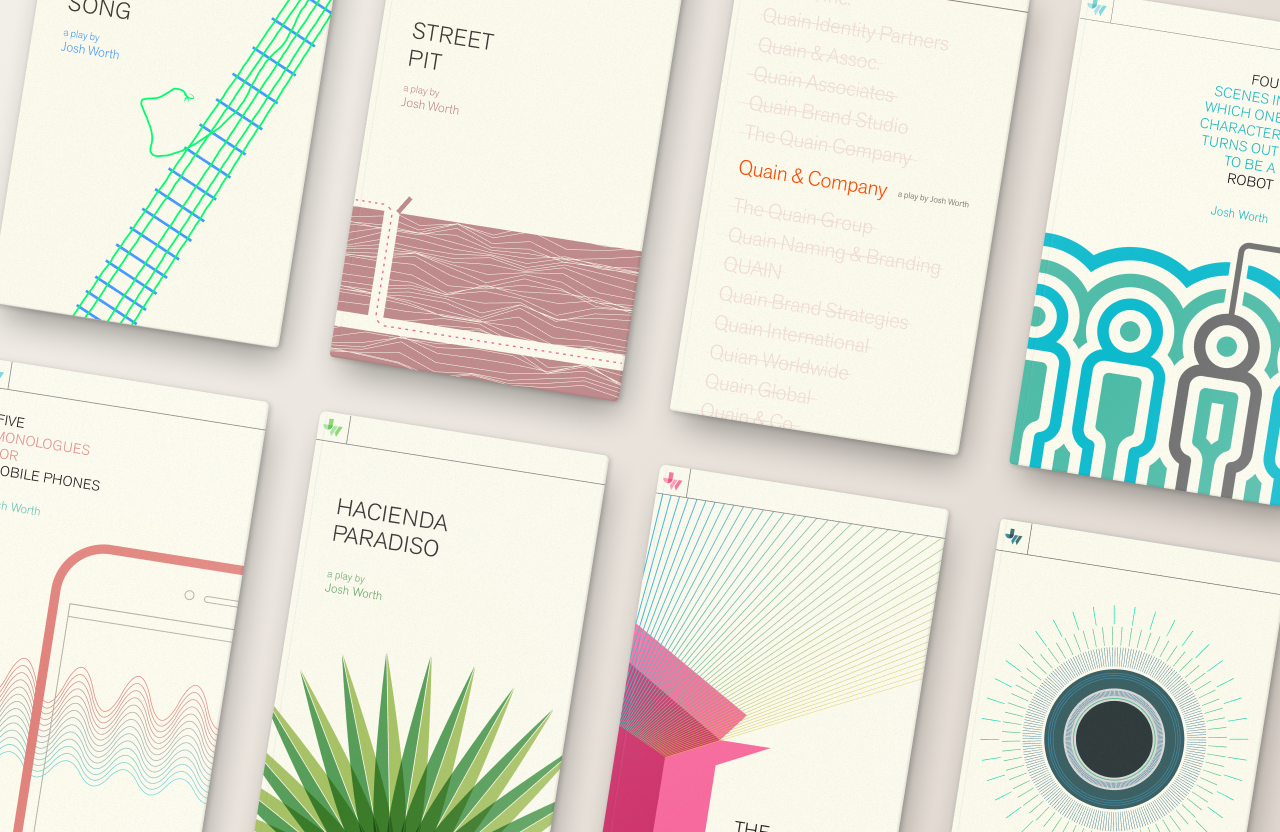
So I finally got around to posting some more plays on the blog. I even gave them a special page, complete with custom-designed covers so you can pretend you’re reading a real, legitimate piece of literature.
I spend a lot of time in front of a laptop, messing around with digital tools, trying to be productive. It's usually pretty satisfying and rewarding, and I also like that the thingies on the screen are colorful and blinky.
But lately, while exploring the disturbingly wondrous capabilities of the new AI tools that have taken over my Mac Book, I’ve been spending a lot more time trying to tell the difference between what’s coming from the depths of the human heart and what’s the product of a $20/month Claude Pro plan.
I studied English in college and fancy myself a student of the “humanities” (was everyone else studying the “inhumanities”?). It turns out that understanding how we express our humanity is proving more useful than my high school counselor expected.
Regardless of how good our computers get at imitating artistic output, creating things out of arts and letters, and appreciating how those creations came about is still the best way to wrap one’s head around the experience of being a human being.
Any act of creative expression comes from a state of effortless effort – a thinking beyond thinking, that’s more than just tapping into patterns of words and images and reassembling them in a way that we hope will connect with someone else. AI is getting pretty darn good at making work that seems like it came from a human, but it doesn’t have access to the original spark of mystery that sets the creation in motion. It still relies on us to provide it, even if that spark means typing something into a text field, like: “Write an amazing story that reveals the secrets of the human soul." AI itself originated from a bunch of people (myself included) thinking it would be a cool project to reverse engineer what goes on in the brain to see if that might give us a better understanding of ourselves.
The impact that project is having on our ability to generate a livelihood from creative expression is a different story. But the challenge of making a living as an artist has always been at odds with the challenge of actually making art. Now we’re all being forced to reckon with the question of why we’re even doing it in the first place.
For me, when I wake up in the morning, before I have a chance to start making sense of the day, I like to write plays, just to find out what the voices in my head have to say. I’ve found that the less I care about how this activity affects my finances, the happier it makes me.
So in the interest of just sharing a few things that are definitely not the product of computer-aided thinking, I’m putting them here on this little corner of the internet. If you find them interesting, you’re free to do whatever you like with them, on the condition that you tell me about it.
I also moved this entire blog off my old Wordpress set-up onto a home-made blogging system that cuts down on content scraper-bots, so these thoughts that at least feel original won’t immediately be sucked into a giant disembodied computer brain. Weirdly, I used Claude Code to make this process go faster, so I also had to make sure the option to “Help improve our AI models” was turned off.
All this is to assure you that, whatever you think of these works, they were created by a fellow human and can only be read by fellow humans.
If you’re short on time and you’d like a recommendation on which one to read, let me know in the comments and I’ll point you in the right direction.